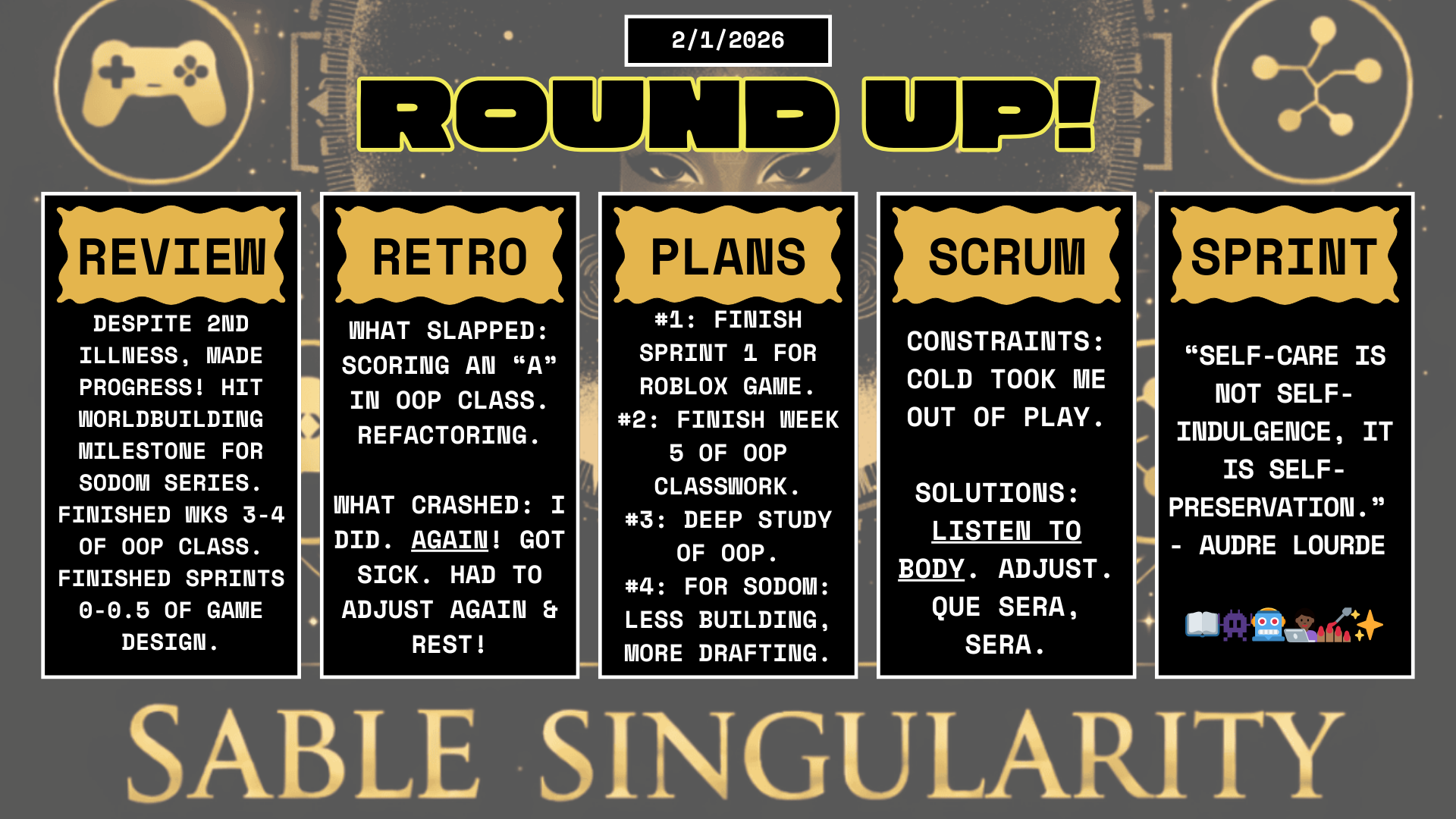
FEBRUARY 1, 2026
Log #3: The 4 Most Underrated Productivity Tools for Engineers!
Log #3: The 4 Most Underrated Productivity Tools for Engineers!
This Week’s Space Tea
In this episode, I break down four of the most underrated productivity tools for engineers—boundaries, self-care, improv, and refactoring—through the lens of lived experience. After a challenging two-week period marked by illness, recovery, and necessary recalibration, I share how these tools didn’t just help me “stay productive,” but helped me protect my health, momentum, and long-term goals.
This isn’t about hustle, optimization theater, or pushing through burnout. It’s about systems thinking, adaptability, and designing a life and career that can withstand disruption without collapsing.
In this episode, I talk about…
- Why boundaries, self-care, improvisation, and refactoring are the 4 most underrated tools for engineers!
- Why Boundaries are not obstacles to productivity, but requirements for healthy, sustainable engagement
- The questions I ask myself before saying yes to an “opportunity,” including ROI, cost, alignment, ownership, and image management—especially for women of color in STEM
- How Self-care functions as a productivity tool, and why your health is non-negotiable infrastructure, not a side quest
- What it looked like to slow down for two weeks due to illness—and how rest actually raised my long-term baseline
- How Improvisation helped me continue making progress when my ideal routines weren’t possible
- Why progress doesn’t have to look perfect to be real—and how momentum can exist even when goals shift
- What refactoring means in programming, and how to apply that same mindset to your time, standards, effort, and scope in real life
- A real example of refactoring my game design sprint schedule to better fit a one-person team—and why it worked
- How refactoring my yearly and seasonal plans unexpectedly aligned my academic coursework with my app development goals, accelerating progress instead of delaying it
- Why flexibility paired with consistency often leads to outcomes better than the original plan
Enter the Mahogany Matrix!
This Week’s Scrum Solo!